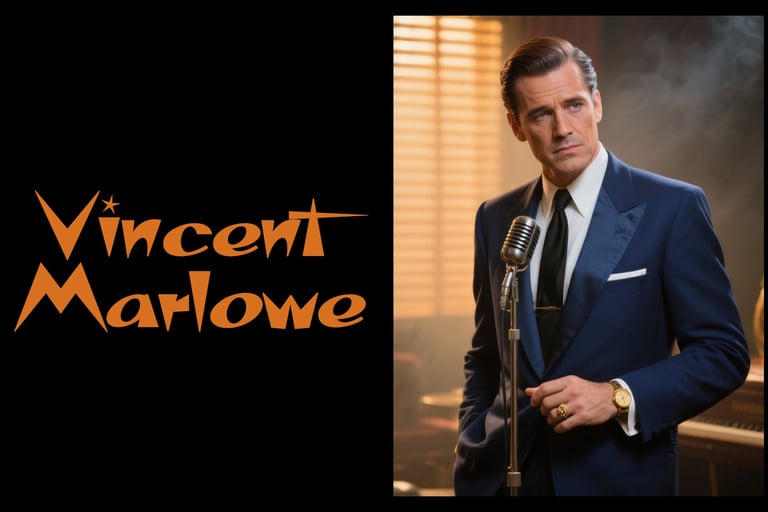
The Velvet Gun of the Golden Era
Vincent Marlowe is the kind of singer they don’t make anymore — the kind you don’t forget once you’ve heard him. Emerging from the smoky jazz lounges and neon-lit supper clubs of the 1950s, Marlowe stood shoulder to shoulder with the era’s greatest crooners, carrying himself with effortless charm, razor-sharp wit, and a voice that could turn a crowded room silent.
Known to fans and insiders alike as “The Velvet Gun,” Vince Marlowe blended smooth baritone warmth with a dangerous undercurrent of lived-in truth. His songs weren’t just performances — they were confessions. Backed by lush big-band arrangements, brushed drums, and sighing brass, Marlowe sang of restless nights, lost loves, second chances, and the romantic pull of an unpredictable life lived one step ahead of regret.
At the height of his fame, Marlowe was a fixture of late-night radio, Vegas stages, and after-hours clubs where legends were made and broken in the same breath. But like many of the greats, his story carried shadows. Whispers of vanished lovers, abandoned tours, and choices made too fast followed him just as closely as the applause. Rather than outrun them, Marlowe folded those truths into his music — giving his recordings a depth and vulnerability that set him apart from his peers.
Tracks like “When the Room Stops Swinging,” “Cigarettes & Confessions,” and “Moonlight on Bourbon Street” capture Marlowe at his finest: elegant, aching, and timeless. His voice lingers long after the last note fades, like smoke in a quiet room, reminding listeners that the best songs are the ones that understand us a little too well.
Vincent Marlowe isn’t just a crooner from the golden era — he’s a legend shaped by it. A man who lived the songs he sang, and sang the truths most men never dared to admit.
“They said Vince Marlowe could stop a room without raising his voice — he just told the truth, and let the music do the rest.”